The World Elephant

I’ve been following Allison Hipple’s writing for some time now. Her blog has always been full of fantastic things, and I’ve always felt safe there. Recently, she decided to record some of her poetry readings on a CD and send it out to anyone that wants a copy. She’s saving up for a trip to Europe right now, so you can give a little back if you want (or perhaps do a trade-off and send her a copy of your own writing?). I expect interesting literary experiments to happen in her travels. Maybe someday there will be a book from those experiences? I really need something of hers on my bookshelf too.

I received her CD the other day and have listened to it a few times already. She’s a very careful observer, and it also helps that her voice is like a lullaby. She reads her words very slowly and clearly. It’s been like therapy. She drew the cover art too, which features her world elephant at the center.

She also wrote me a note, and on the back of it, she has her own official stamp: an elephant and a quill. Fun fact: I also have soft, feminine hands that people have written poems about.

Black Sheep

My sister hasn’t read much of my writing, but she does seem to like to ask me how much is about her. She laughs and calls herself my biggest inspiration. I’ve told her how I’ve written about her before, sure, but she likes to annoy me about it every once in a while anyway. She’s a person who reminds you again and again that she’s there and won’t be leaving very soon.

Last night, when we were going for a walk, my mom turned to us and remarked how we were the artists of the family. Where did we come from? I asked. She doesn’t know, she said. But there you have it. Paula has always been about the visuals and the aesthetics, and I’ve always been about the fantasies and the theories. Paula likes fashion and design, shininess and volume and bright colors, drawing and painting and photography and the process of capturing nature. I’m into books and fictional characters, subtlety and softness and sepia understatedness, ideas and alternate realities and mixing up fabrications in hopes of maybe going beyond just the plain truth. We are quite different in what we make and how we do it, and we are quite different in spirit.

But there’s still a kindredness. Sometimes, we make things together anyway and collaborate. Sometimes I do write things about people like her. Right now, I’m working on a poem and a short story about a sister who likes shiny things too, and her name is Raven. Glitter boots and feather boas and cupcakes with silver sprinkles.

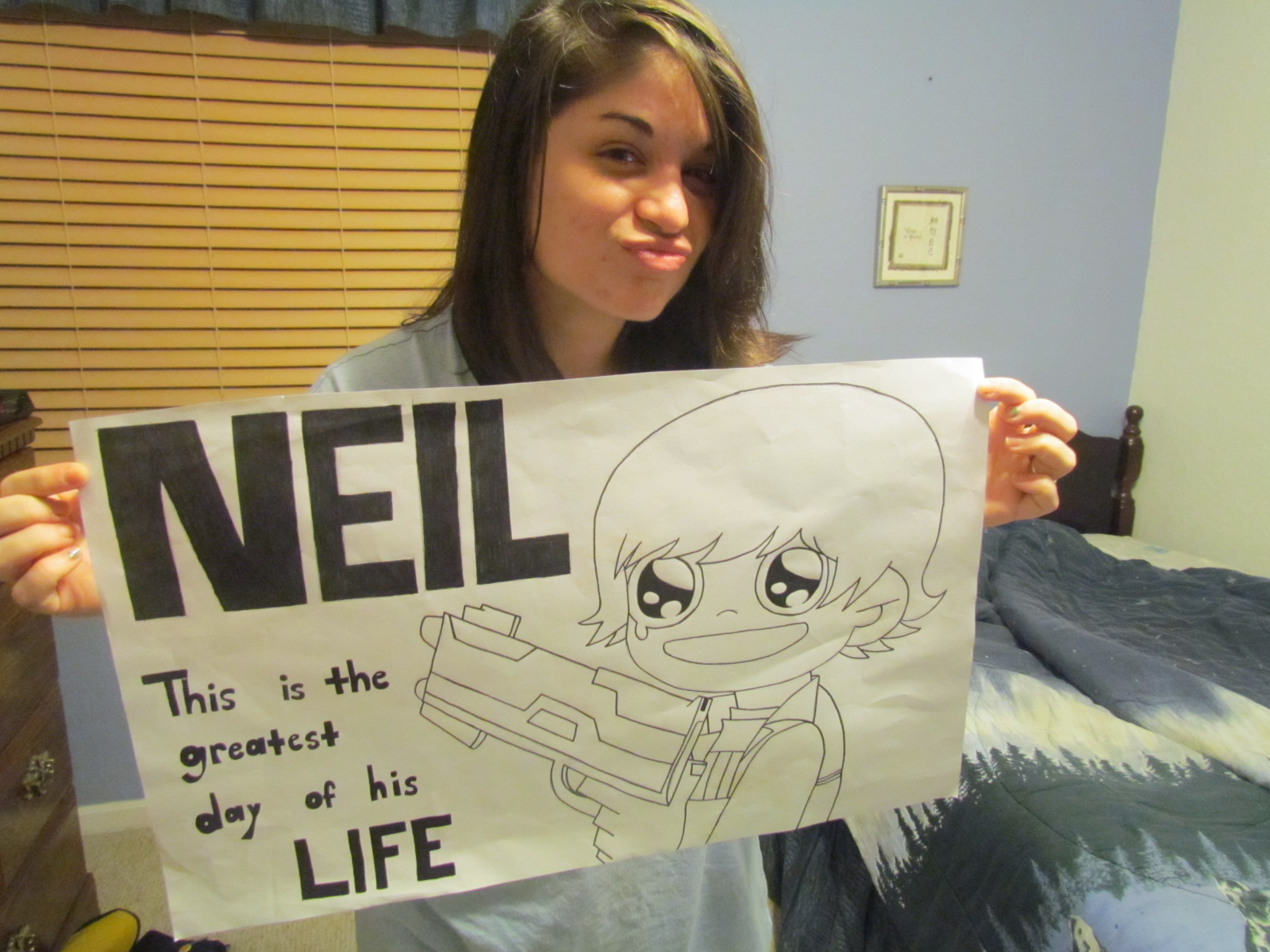
Sometimes she draws things from books that I’ve read, like this:

And books that she’s read:

Sleeping Through Hurricanes: Daytime Dreamscapes

When it comes to the dream life, I don’t remember anything at all. It’s never really been a part of my routine like it is for other people. When I sleep, I don’t move and I don’t wake until it’s morning. I’ve slept through hurricanes before.

I always think it would be a curse to be one of those people who always remembers what their unconscious stirs up every night. My mom used to have a recurring chase sequence in her dreams that drove her crazy for over a decade. I have a lot of friends like that too and I feel somewhat sorry for them. One of my friends seems to always dream about killing people in a really graphic fashion, which unsettles her quite a bit. When I sleep, I like having that absolute oblivion. I don’t want cracks of light and colors creeping in. Or murders and dismembered body parts, for that matter. I want to forget and I want sleep-death.

On the other hand, it could make for good storywriting. A lot of writers and artists have worked dreams directly into their style and aesthetics, and I really love when that happens. I love the effects surrealism can have, despite the fact that I wouldn’t know anything about it on this more personal level. I like how things suddenly become more figurative and how worlds have the potential to run parallel or bleed together.

In high school, we had to keep a dream journal for my creative writing class. I ended up having to make everything up simply because I could never remember my dreams. Sometimes, there were scraps or residual images, but never enough to assemble a story from. One of the stories I tried to turn into a dream was of an ancient temple (everything was grainy or sepia-toned, no colors) that I was desperately trying to navigate. It was like a labyrinth and I was completely lost, running and running until a flood eventually carried me away to the exit. Or maybe it wasn’t an exit and I actually drowned instead. That was the moment when I was supposed to wake up.

I wonder if it is possible to navigate that temple for myself again while asleep. I’ve heard of lucid dreaming and the possibility of taking control of the plot yourself, but I wouldn’t know anything about it. It seems like an art completely lost on me. I also read a study once that somehow found a positive correlation between daydreaming (thinking creatively and critically) a lot during the day and sleeping well (and dreamless) at night. So, I suppose, it broke people down into daydreamers and nightdreamers, travellers of the conscious and the unconscious.

Maybe I’m just one of those insufferable daydreamers whose waking life is enough like a dream–or navigated like a dream–that nightdreaming is seen as irrelevant or stale by comparison. Maybe the borders are too strongly sealed off and it can’t bleed through (sorry, Mr. Murakami) and my unconscious knows its place. It knows how I suddenly wouldn’t be the pilot (or the author) anymore and I’ll lose my grip quickly. But then again, most of my time seems to be spent on thinking about things like labyrinths and floods anyway.

Little Ghosts and Their Graves

Back when I was a teenager, I didn’t care very much for other teenagers. I only had a handful of people I could stand to be around and I sometimes even questioned if this time was ever well spent. I really wanted to find more people who I wouldn’t just tolerate, but could appreciate. Fortunately, online friendships were becoming more of a regular part of adolescence, with the advent of social networks like MySpace and blogging places like Livejournal. So I dove in and created my own profile on both. Mostly, I just started adding people from my school because they were adding each other anyway, and we would comment on each other’s awkward pictures and posts in our journals—whether or not we actually talked in real life. It was strange, I suppose, when you look at it in retrospect. I also noticed how some people were adding other people they didn’t even know and I started doing it too. In fact, my best friend and I even made a contest out of it at one point. I remember how I ended up with over 8,000 “friends” on MySpace because of it.

I didn’t plan on it, but some of these friends ended up staying for a while. Some of these friends ended up getting to know me more personally and more intimately in ways that people in real life couldn’t and still probably can’t. Maybe it was partially because I was a writer, and because they were learning about me exclusively through the written words I chose to put down on the screen and I liked that better. I can’t really articulate myself in real life properly anyway, or can’t find the energy to do so. I felt more authentic, I felt like I was more interesting. I’d started writing to people more regularly and I found some pen pals. I wrote letters to people across the sea and across time zones. And, of course, I still do.

Of course, on the other hand, some of them vanished completely. What can you do? The internet allows you to pull the plug at any time, it allows you to cut people out that try to force their way in. It lets you become a recluse. You can rise like the phoenix in sporadic bursts, or you can reinvent yourself completely like some other kind of mythical creature. It’s up to you. I remember a girl who would joke with me about a boy who wore only Abercrombie and Fitch and had orange skin and thought he was God’s gift to humanity. I remember a boy who was into photography and read everything I wrote. I also remember another girl who had a best friend that killed herself when she was only fifteen, and it was during this time that I knew them both online. This suicidal girl with dark hair and polka dot shirts, she wrote to me a few times. Her friend didn’t suspect anything and her family was in complete shock. She was really gone—both online and off. And even though I never knew her in real life, something was suddenly missing. Her friend wrote poems about her and I tried to console her as best as I could. Her profile turned into a memorial. These severed connections still make me sad, even though I may have been only a small part of their lives. Maybe nothing at all. Sometimes I play a pathetic game with myself where I try to remember as many of these little ghosts as I can and wonder how much they’ve forgotten.

But my longest friendships have also been like this. They started with a click and a conversation, or a mutual friend who thinks we would get along. Is this so different from real life? Isn’t this a part of it anyway? Or has it not become real enough yet? We may never meet and we might be too far away, but we share ourselves through our letters and photos and videos. I don’t think our relationship is any less real than anything else just because we can’t hug. It would be nice to spend some time together and play some video games and browse the bookstore shelves, but I also like just being able to read those who matter and share with those who decide to linger.

Why I Write – Part Infinity

I’ve written about this plenty of times before, but it’s continuous anyway. I keep coming up with more reasons to give myself. But I suppose that’s a good thing. You need that sometimes. 

Why I write:

To say something. It should be obvious, but you’re surprised by how much you have to remind yourself. You slap down words because there’s something stuck in between your ears: a character, a conversation, a concrete image of sorts. It’s the hard “k” sounds that push themselves in when you’re busy trying to listen to some other music. They cut into you like a thorn and you try to pull them out. It’s cacophony building its way up.

To pray. You don’t believe in a god anymore, but you can’t think of anything more close to the divine and the act of meditation than creating things yourself. It’s ritual, it’s demanding answers from the void. You were once a Catholic, but now you suppose you’re an artist. You wonder if people think you’re more damaged and more ashamed now, ironically, or more helpless.

To kill. You light up the bottle or pull the pin and throw it at the mustached kid’s car. Just like a fist. As the fire flickers, you remember: That one kid who wore his pants down low and asked about your sexual orientation every other day during high school. You kick the giraffe in the testes when he sees your destruction and he wilts like a pansy (you come up with this pun, just like that, and you actually say it to him on your way out).

To heal. You knock on her door and ask her to tell you about the car crash. She finally tells you about what he did, how he hit more than you suspected. How he was exciting, his car flying on the highway and the two of you without seatbelts holding you down, screaming at the night. But she was done. Rolling her eyes, she says she’s done. He was gone and gone for a while now, and she was going to be a phlebotomist. I’m not so squeamish anymore, she says, and apologizes. She’s missed you, and it’s her fault. She wrote to you first, unexpectedly, and that was why you were here. You’d been waiting.

To listen. Your mother tells you about her aunt who believed her husband came back as a cat. Your friend tells you about her first kiss on an airplane with a stranger who read Hemingway. You should be writing this down, she says, and you nod. Your professor tells you how your essay was perfect and she gasps when you tell her you won a short story contest. Everyone else tells you to become a psychologist because you know how to sit still and you remember the right things for them, in the right order. You entertain the idea, but you conclude that you’d rather write about people’s problems than actually deal with the people and the problems themselves.